
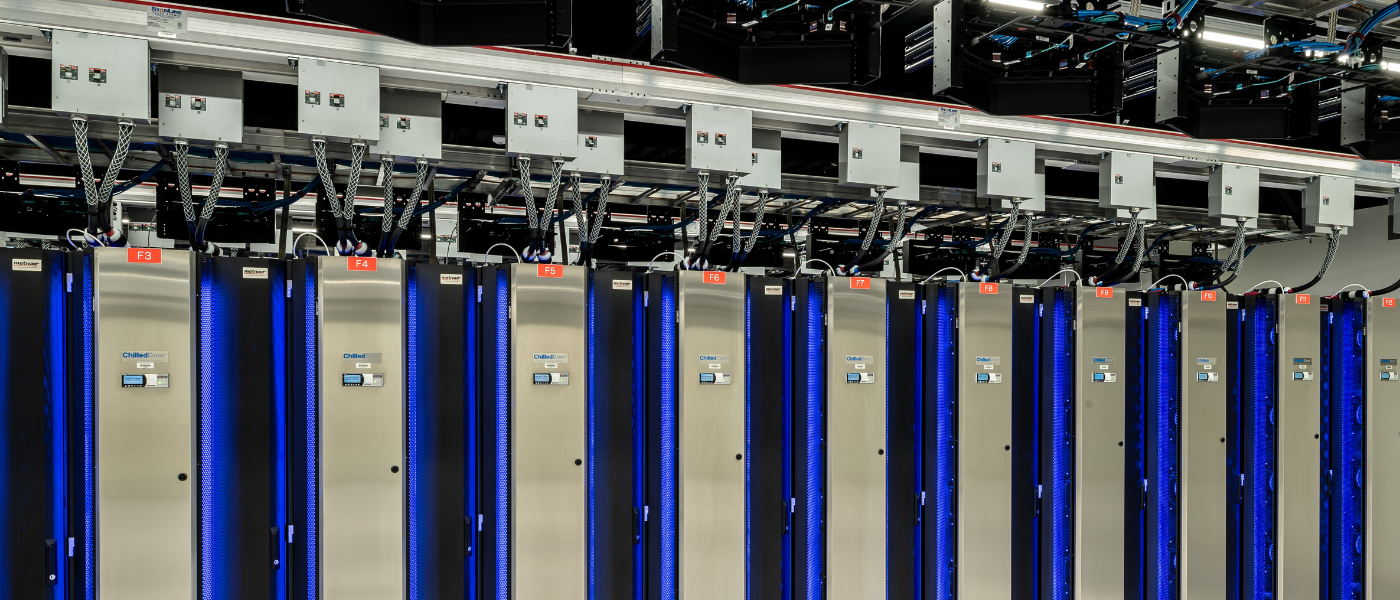
As demand for digital infrastructure increases and chip technology continuously advances, data centers have become one of the fastest‑growing and most technically demanding project types in the construction industry. Their scale, speed‑to‑market pressures and technical complexity challenge teams to deliver facilities that are efficient today while remaining adaptable for what comes next. Traditional hyperscale campuses, however, lock owners into permanent, site‑built infrastructure, with large volumes of concrete and steel poured for a single custom design that can’t easily change as technology or strategic priorities shift.
Prefabricated modular data center systems offer a more flexible alternative. Built from readily available kit‑of‑parts models, modular systems are reconfigurable and relocatable, allowing teams to deploy scalable capacity across regions with less risk, less waste and greater predictability, while still meeting the unique requirements of each data center project.
- 30–40% faster schedules
- 40–50% reduction in construction waste
- 20–30% cost efficiency
Key Considerations for Modular Data Center Delivery
 Advanced Trade Coordination Through VDC
In a high‑density data environment, power distribution, cooling pathways and structural framing are inseparable. When systems are designed separately, lower performance and higher total costs become risks. With an integrated design approach, systems are developed concurrently:
- Cooling strategies directly inform electrical distribution
- Structural spans determine heavy equipment location and M/E/P system flows
- Building envelopes are tailored for heat‑rejection needs
Early Virtual Design & Construction (VDC) modeling provides precise coordination of conduits, racks, piping and clearances critical for off-site fabrication and modular repeatability to eliminate surprises in the field.

Strategic Procurement of Long‑Lead Equipment
Modular construction brings predictability to procurement by standardizing equipment packages across multiple builds. Early engagement with suppliers, especially for switchgear, generators, cooling systems and specialty electrical components, reduces risk associated with industry‑wide lead‑time constraints.

Regional Manufacturing & Installation
A regionalized manufacturing model supports distributed deployment by enabling owners to right‑size facilities closer to where capacity is needed. Shifting fabrication closer to the project site also reduces logistical risk and improves speed‑to‑market:
- Standardized parts support strategic vendor relationships
- Regional sourcing within 500 miles shortens delivery schedules
- Prefabricated modules reduce site deliveries by 60–70% and onsite labor by up to 40–60%, reducing site congestion for improved safety and site control

Commissioning at the Fabrication Shop
Beginning the commissioning process for modular components at the manufacturing location accelerates project schedules, ensures quality through the controlled factory environments and reduces on-site labor. Before leaving the factory, modular components undergo Factory Acceptance Testing (FAT), often using digital tools to manage punch lists and verify quality. Once the prefabricated components are transported and installed on site, systems are reviewed to ensure they operate as intended in the final environment. Because of the precision of off-site engineering, components are most likely to fit and function with minimal on-site adjustments.
The Result: Faster, More Flexible Data Center Construction
Modular construction fundamentally changes data center delivery and lifecycle. Separating capacity from permanent, site‑bound infrastructure ensures speed-to-market without risking future waste. Capacity can be deployed incrementally, expanded with repeatable modules or redeployed as market demand shifts. The result is a more resilient data center strategy that delivers capacity faster, adapts to change and dramatically reduces material waste over time.
Contact
 Dave Perez, Director of Advanced Technology and Mission Critical
dperez@consigli.com | LinkedIn
Dave leads Consigli’s continued growth and expansion in critically important, rapidly evolving market sectors. With more than 30 years of diverse experience, Dave has a proven track record of successful project development, having led the design, construction and site-selection for data centers, as well as for cutting-edge advanced manufacturing, semiconductor, renewable energy and biotech facilities. In his role, Dave provides strategic leadership and guidance, serving as a key resource for project teams to ensure that client needs and expectations are met.
 Bill Seery, Director of Prefabrication
wseery@consigli.com | LinkedIn
With two decades of experience delivering prefabrication solutions for commercial construction projects, Bill drives decision-making around labor optimization, design coordination, procurement strategies and quality control—ensuring clear scopes of work and greater efficiency, consistency and predictability throughout the construction lifecycle. Bill is an advocate for lean construction and manufacturing, as well as a proponent of energy efficient buildings, having received a Shingo Prize for Operational Excellence and a professional certification from Phius.