
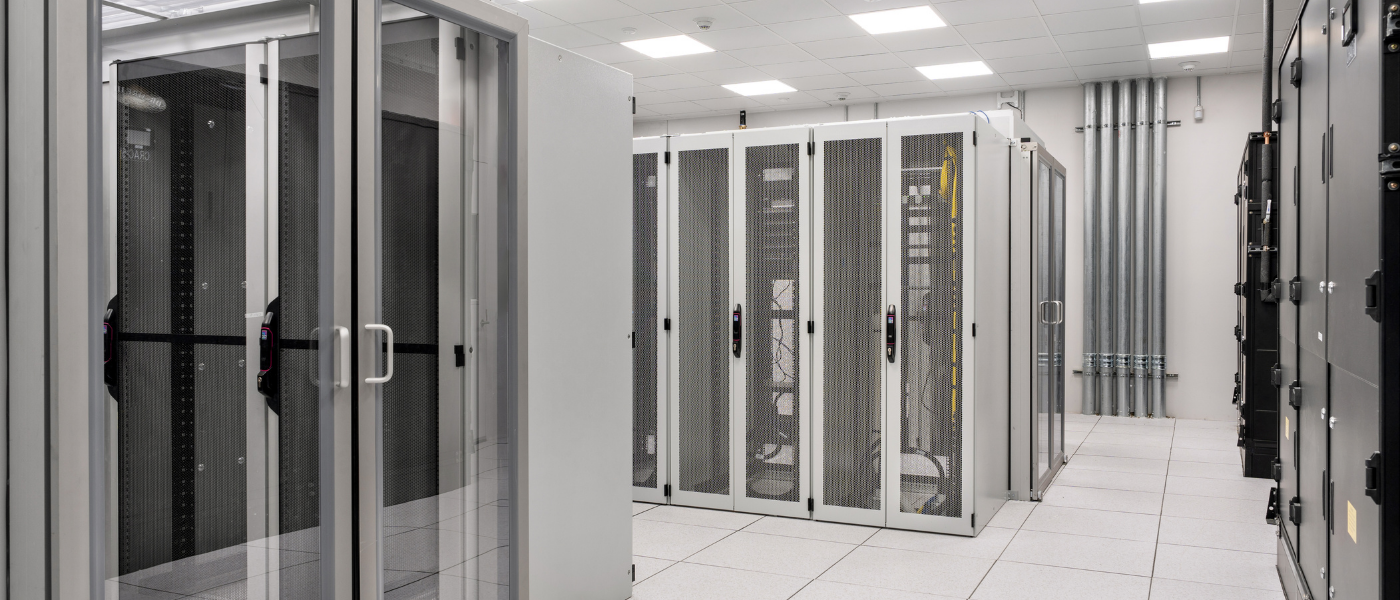
As demand for data center capacity continues to accelerate, many owners are looking for the fastest path to new capacity. While new-build projects often face power, permitting and infrastructure constraints, legacy data centers – facilities that rely on older infrastructure, systems and operating models – possess one of today’s most valuable assets: existing power.
Many legacy data centers were built for earlier generations of enterprise IT, but with the right modernization strategy, they can be repositioned to support today’s computing demands while extending the value of infrastructure already in place. Success depends on understanding what can be reused, what must be upgraded and how to complete the work without disrupting operations. To capture the full value of existing infrastructure and bring new capacity online faster, owners should focus on these four key steps.
1. Assemble the Right Mission Critical Team
Successful legacy data center modernization begins with assembling a design-build team that understands the complexities of mission critical environments. Before modernization strategies are evaluated or design decisions are made, owners should engage a design-build partner to help assess existing conditions and align project goals with operational requirements. The most effective design-build teams bring:
- Experience working within live, occupied mission critical facilities.
- Strong preconstruction capabilities to evaluate existing infrastructure and identify risks early.
- Deep mechanical, electrical and plumbing (M/E/P) expertise focused on power, cooling, resiliency and capacity expansion.
- Virtual Design & Construction (VDC) capabilities to support planning, coordination and constructability reviews.
- Proven phased construction strategies to minimize operational disruption and downtime risk.
Establishing the design-build team early creates a more informed path forward, allowing owners to make critical investment decisions with greater confidence.
2. Assess Existing Infrastructure and Capacity
A thorough existing-conditions assessment is the foundation of any modernization plan. The team should evaluate available power, water, fiber connectivity, cooling systems, electrical infrastructure, structural capacity and the remaining life of critical equipment. Identifying any stranded power capacity – electrical infrastructure that was originally designed into the facility but is no longer being fully utilized – is critical. In today’s market, that existing power may be one of a legacy data center’s most valuable assets.
The intended use of the building will shape the modernization strategy. A legacy facility may continue supporting enterprise workloads, or it may be repositioned for colocation, edge computing or AI-ready environments. Each path carries different requirements for cooling, redundancy, equipment replacement and structural upgrades.
3. Plan Early Around Cost, Schedule and Constructability
In the mission critical market, project outcomes are determined long before construction begins because evolving computing requirements can quickly create cost, schedule and operational risk. Early planning gives owners greater certainty and allows teams to address constraints before they impact the project. Several preconstruction strategies can help position a modernization effort for success:
Engage Design-Assist Trade Partners Early
Mechanical and electrical systems represent some of the most significant investments in a data center modernization project. Bringing mechanical and electrical design-assist trade partners into the project during design allows teams to validate equipment selections, evaluate installation approaches and identify potential risks with these specific trades before documents are finalized. Early design-assist trade partner involvement can also provide greater insight into procurement challenges, labor requirements and sequencing considerations that may affect the modernization strategy. This collaborative approach helps align design decisions with real-world construction requirements and supports more predictable project delivery.
Develop a Long-Lead Equipment Procurement Strategy
Transformers, switchgear, generators, uninterruptible power supply (UPS) systems, cooling equipment and other critical infrastructure can significantly influence project schedules. Evaluating procurement requirements early allows teams to identify long-lead items for direct purchase to maintain project momentum despite market constraints. Early procurement planning can protect both schedule and budget while reducing uncertainty during construction.
Perform Detailed Constructability Reviews
Legacy facilities do not have the available space or flexibility of a greenfield data center. Existing structural conditions, active equipment and constrained access routes can create installation challenges that are not always apparent in design documents. Formal constructability reviews help teams identify coordination conflicts and equipment access limitations before construction begins. For mission critical facilities, resolving these issues early supports safer installations and minimizes disruption to ongoing operations.
Leverage VDC and Facility Visualization
VDC technologies provide owners with a clearer understanding of how new infrastructure will integrate with existing systems. 3D modeling can be used to evaluate equipment clearances, maintenance access, routing conflicts and future expansion opportunities before work begins in the field. For occupied facilities, visualization tools also improve stakeholder alignment and help operations teams understand how construction activities may affect facility performance.
Implement Continuous Estimating and Value Management
Modernization strategies often evolve as existing conditions become better understood. Continuous estimating creates real-time visibility into cost impacts as design decisions are made rather than waiting for milestone pricing exercises. This approach allows teams to evaluate alternatives, respond to changing market conditions and identify value-management opportunities without sacrificing reliability. Maintaining cost transparency throughout design supports more informed decision-making and reduces the likelihood of budget surprises later in the project.
4. Build an Operational Risk Strategy
Many legacy data center renovations occur within active facilities where portions of the building must remain operational throughout construction. In these environments, maintaining uptime is a business requirement. Even a brief disruption to critical power or cooling infrastructure can impact operations, trigger outages and create significant financial risk. Before construction begins, teams should establish project phasing, shutdown windows, temporary systems, Methods of Procedure (MOPs) and Standard Operating Procedures (SOPs). These plans provide very little room for deviation to transition infrastructure safely.
Electrical upgrades require particular attention. Modernization often involves working around energized systems while portions of the facility remain online. Teams must isolate active electrical distribution, maintain temporary redundancy where needed and carefully sequence cutovers. Once upgrades are complete, the isolated infrastructure can be tested, recommissioned and safely integrated back into the operating environment. A disciplined operational risk strategy helps protect uptime and give owners confidence that modernization work can proceed safely within a live mission critical facility.
Where Consigli Helps
Consigli helps clients in the mission critical market evaluate existing data center infrastructure, identify stranded power opportunities and develop practical modernization strategies. Our in-house preconstruction, M/E/P and VDC teams support early planning, trade partner coordination and constructability reviews, while Arch Direct and Arch Energy help address long-lead procurement and emerging energy needs.
With offices throughout the Northeast, including Massachusetts, Connecticut, New York, New Jersey and Washington, D.C., Consigli is positioned near many of the country’s most established mission critical and enterprise data center markets. This regional footprint allows our teams to bring local market knowledge, strong trade partner relationships and rapid project support to modernization efforts across legacy facilities.
For owners facing increasing capacity demands, modernizing existing infrastructure may offer one of the most practical paths to bringing new capacity online. With the right strategy, legacy data centers can help accelerate deployment timelines while improving resiliency and extending the value of existing assets.
Contact
 Dave Perez, Director of Advanced Technology and Mission Critical
dperez@consigli.com | LinkedIn
Dave leads Consigli’s continued growth and expansion in critically important, rapidly evolving market sectors. With more than 30 years of diverse experience, Dave has a proven track record of successful project development, having led the design, construction and site-selection for data centers, as well as for cutting-edge advanced manufacturing, semiconductor, renewable energy and biotech facilities. In his role, Dave provides strategic leadership and guidance, serving as a key resource for project teams to ensure that client needs and expectations are met.