
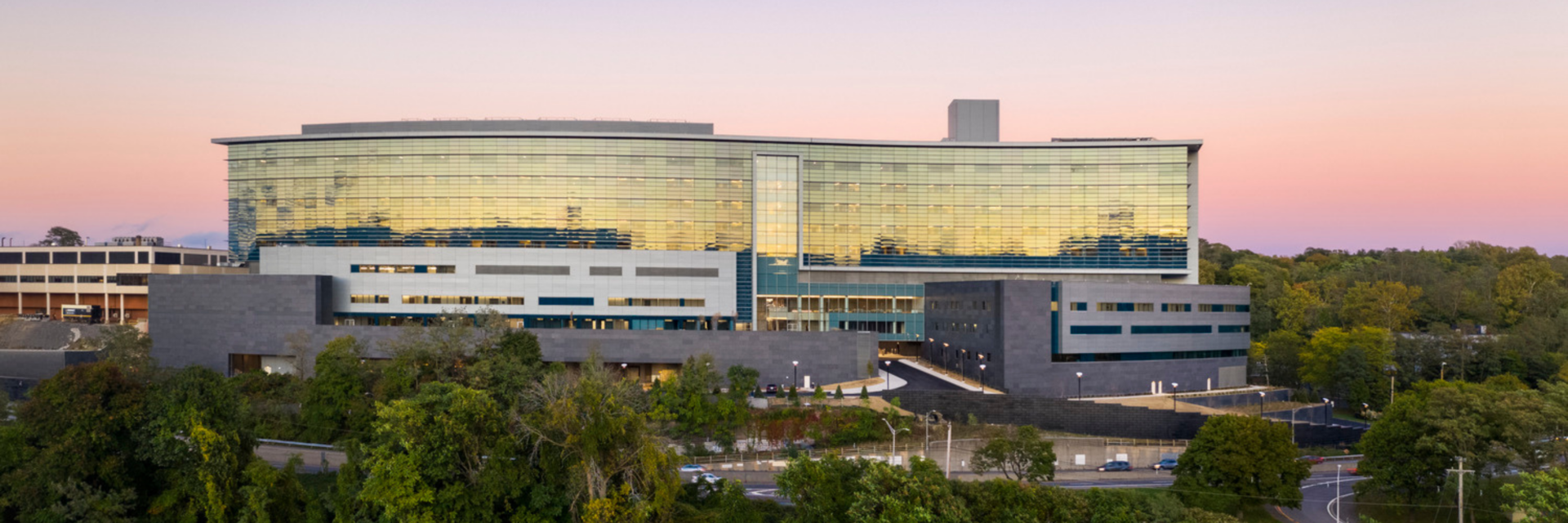
While healthcare systems continue to invest in new, ground-up facilities, the environment for capital spending has become more constrained. Rising costs, labor shortages, supply chain volatility and shifting care models are putting pressure on long-term value. In this climate, protecting capital spend requires a more proactive approach to delivery, as reactive strategies often result in misaligned investments.
Prioritizing early alignment with project partners and proactive risk management on new construction projects helps ensure facilities meet operational needs while maintaining financial resilience over the life of the asset. These three strategies help provide certainty during planning to limit costly construction rework and reduce future operational challenges:
1. Design for the Future
A significant advantage of ground‑up construction is the ability to plan beyond Day One. Future‑ready healthcare facilities embed flexibility from the start, allowing for changes in patient acuity, emerging technologies, workforce pressures and shifting reimbursement models. Facilities designed only around immediate needs often struggle to adapt, forcing healthcare systems into costly renovations or operational compromises far sooner than anticipated. Flexible, scalable facilities adapt to evolving care models without disrupting operations.
 Where We’ve Done It
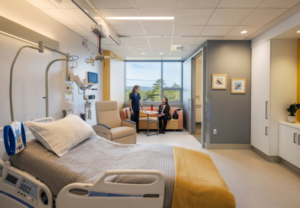
The Dartmouth Hitchcock Medical Center Inpatient Tower was deliberately sized beyond immediate needs, with two shell floors reserved for future inpatient beds and a first‑floor shell space planned for later fit‑out. Patient rooms were constructed to ICU standards, allowing the Medical Center to shift between medical‑surgical, step‑down and ICU use as demand changes. Modular and prefabricated elements, including penthouse assemblies, façade systems, headwalls, bathroom pods and integrated M/E/P/FP racks, further increased flexibility while reducing cost and long‑term operational risk.
2. Align Clinical Vision Before Design is Final
Because ground‑up projects begin with a blank slate, early clinical engagement is critical to defining the flexibility of the space from the start. Validating equipment needs and operational assumptions through full‑scale, walkable mock‑ups allows clinicians to experience spaces as they will function in real life, not just on paper drawings. As mock‑ups evolve from end-user feedback, builders and trade partners can also test constructability and trade sequencing before bringing the work to the field. This early alignment reduces costly changes and builds confidence across clinicians, designers and builders.
Where We’ve Done It
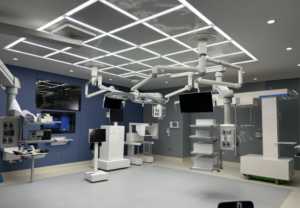
At Memorial Sloan Kettering’s Kenneth C. Griffin Pavilion, the Turner‑Consigli Joint Venture used a three-phased, full‑scale mock‑up strategy to align clinical vision early. Walkable mock‑ups of patient rooms, PACU bays and an operating room evolved from Phase 1 low‑fidelity layouts to Phase 3 fully constructed spaces built by the project team. Clinician feedback and constructability testing informed design refinements, clarified trade interfaces and helped resolve constructability issues prior to full deployment.
3. Ensure Technical Certainty for Infrastructure
Modern healthcare facilities rely on thousands of interconnected systems—like HVAC, power, medical gases, IT, fire protection and building automation—often packed into tight overhead and interstitial spaces. In ground‑up construction, these systems typically define the critical path, making early coordination essential. Pre‑leveling infrastructure manufacturers helps teams understand lead times, dimensions and constraints before procurement begins. Virtual Design & Construction (VDC) coordination creates resolutions to clashes and access challenges before fabrication and installation. When sequencing is addressed early, teams can avoid rework, maintain momentum and protect schedule, quality and long‑term facility performance.
Where We’ve Done It
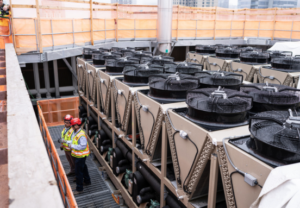
At Northwell Health’s Victoria & Lloyd Goldman Health Care Pavilion, Consigli coordinated an exceptionally dense overhead environment, integrating more than 250 dedicated outdoor air system (DOAS) units with new core‑and‑shell mechanical and building management systems across a 160,000 sq. ft. fit‑out. Early manufacturer pre‑leveling protected procurement, but as coordination advanced, acoustic, access and maintenance conflicts emerged within the congested ceiling spaces. Using VDC-led coordination, the team redesigned access strategies and resolved clashes before fabrication to maintain schedule continuity. The resulting fully coordinated, clash‑free model will be issued as part of the project’s closeout documentation, providing a reliable baseline for Northwell and its consultants to reconcile with record 2D as‑builts in support of future Digital Twin development.
How Consigli Helps
Consigli supports healthcare clients by creating certainty early when it matters most. Our healthcare builders focus on:
- Planning for flexibility and long‑term operations
- Early clinical engagement and mock‑up strategies
- VDC‑led coordination and disciplined sequencing
- Proactive procurement planning
- Modular and prefabricated approaches
The most successful healthcare facilities are shaped by early decisions. When certainty is built into planning, projects perform better long after opening.
Contact
 Raffaela Dunne, P.E., Market Director of Healthcare
rdunne@consigli.com | LinkedIn
As Market Director of Healthcare, Raffaela leverages more than three decades of engineering and development experience to help leading healthcare systems plan and deliver complex, high-performing facilities, spanning ground-up development, occupied renovations and long-term campus master planning.